5 Signs It's Time for a New Furnace Installation
Most furnaces fail on the coldest night of the year, but they usually warn you first, and these five signs are the warnings.
October 16, 2026 · 4 min read
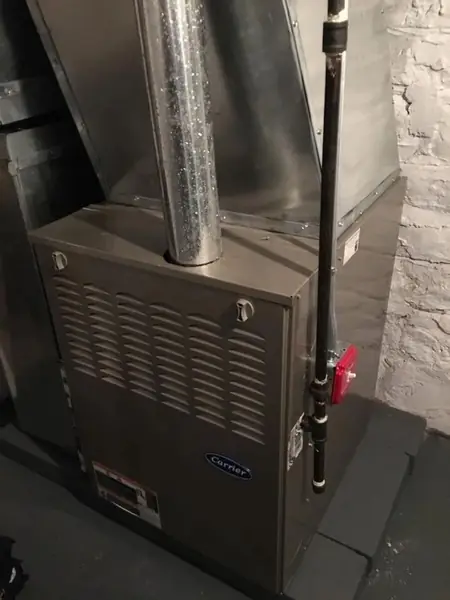
Most furnaces in New York basements were not chosen by the people living above them. They came with the house, installed by a previous owner or a landlord, and they sit behind a water heater or a stack of storage boxes doing their job until the first hard cold snap says otherwise. Knowing the signs lets you replace it on a calm October weekday instead of a freezing Sunday night.
Below are the five signs we point to when a homeowner in Staten Island, Brooklyn, Manhattan or Queens asks whether to keep repairing or start planning a replacement. No single sign is a verdict. Together they paint a picture, and a diagnostic inspection fills in the rest.
Sign one: the furnace is old enough to have a history
A furnace that has been looked after usually runs somewhere between fifteen and twenty years. A unit in a dry, tidy basement with a fresh filter every season can outlast one wedged into a damp cellar closet beside a laundry line. But once yours is in the back half of that range, every other sign on this list counts for more, because the parts that fail stop being isolated accidents and start being the whole system wearing out.
Sign two: the gas bill keeps climbing and the house doesn't feel warmer
Furnaces lose efficiency slowly. Burners get dirty, the heat exchanger collects scale and soot, and the blower motor pulls more current to move the same air. You won't see any of it. What you will see is a bill that creeps up winter after winter while the rooms feel no warmer, or feel warmer only when you push the thermostat higher than you used to.
Compare this winter with the last two. A cold snap explains a spike. A steady upward drift through mild months does not, and on an older unit it usually means the furnace is spending your money just to stay alive.
Sign three: the sounds and smells have changed
Every furnace has a sound at startup and a rhythm while it runs. What matters is change. Banging on ignition, squealing from the blower, rattling panels, or a burning smell that lingers past the first cycle of the season all deserve a call. A faint dusty smell on the first run of the season is normal. A smell that sticks around is not.
If you ever smell gas or exhaust, get everyone outside and call the gas utility or 911 before anything else. For a furnace that has simply gone dead on a freezing night, New York Mechanical takes emergency calls 24/7, and that is exactly what the line is for.
Sign four: repairs keep arriving in a row
One repair on an older furnace is maintenance. Three in one heating season is a pattern. Ignitors, flame sensors, inducer motors and control boards are each modest parts on their own, but when they fail one after another they are telling you the whole unit is at the same stage of life. In an attached rowhouse in February, every visit can mean hours with the heat off.
The honest question is not whether the next repair is affordable. It is whether you are buying time on a furnace whose heat exchanger you can't afford to have fail. A cracked heat exchanger is the one finding that usually ends the repair conversation, because it is a safety matter and not a comfort matter. A rough way to weigh it:
- One repair on a furnace that is still young: fix it and carry on.
- Repeated repairs on a furnace in its late teens: ask for a replacement option alongside the repair quote.
- A cracked or failing heat exchanger at any age: stop using the furnace until a technician has looked at it.
Sign five: rooms that never agree with each other
A cold front room, a back bedroom that bakes, a top floor that never reaches the number on the thermostat. Sometimes the cause is the ductwork: a closed damper from years ago, a return blocked by furniture, undersized runs added in a past renovation. Often it is something small, like blocked intake vents or a wrong fan speed, and the fix is an adjustment.
Other times the furnace itself can no longer keep up. It short cycles or runs for hours without catching up. A technician can tell the two apart by measuring airflow and temperature rise. That is why a diagnostic inspection comes first at New York Mechanical: it separates a duct problem from a furnace problem before anyone talks about replacing anything.
What a replacement decision looks like
If several of these signs apply, the next step is a conversation, not a purchase. The process we follow is simple: a consultation about how the house actually heats, a site assessment of the basement or utility space and the ductwork, the installation, and then testing to confirm the system is doing what it should. Sizing matters: a unit that is too big short cycles, and one that is too small never warms the house on a bitter night.
We are a Daikin dealer and install Goodman and Daikin equipment, and financing is available through FTL Finance and Synchrony if you would rather spread out a larger project. Anthony and the family-owned team have worked out of Staten Island for two decades, and would rather tell you to repair a furnace that has life left than sell you one you don't need.
Our heating work is described at /services/heating. If your furnace is showing two or more of these signs, call (646) 315-2271 and we will start with an inspection.
New York Mechanical Heating & Cooling, (646) 315-2271
Call (646) 315-2271More articles
How Often Should You Schedule Furnace Repair Services?
Once a year is the baseline, but an old furnace in a hard winter earns a second visit.
Heat Pump vs Central AC: Which Fits a New York Home?
The right system depends less on the brand than on whether your building already has ductwork and how many rooms you need to control separately.