Heat Pump vs Central AC: Which Fits a New York Home?
The right system depends less on the brand than on whether your building already has ductwork and how many rooms you need to control separately.
October 16, 2026 · 4 min read
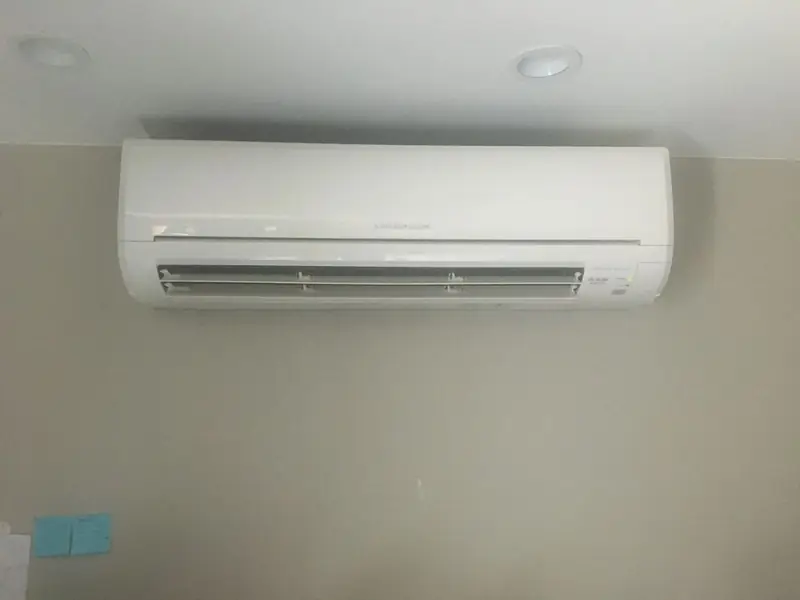
Homeowners ask us this every spring, usually after a summer of window units and a lot of noise. The question is usually phrased as heat pump versus central air, but the real decision is between two different ways of moving heat around a building: individual indoor units fed by one outdoor unit, or a single central system pushing air through ducts. New York housing makes the choice more interesting than it is in a new suburban house.
What each system actually is
A ductless mini-split is a heat pump. One outdoor unit connects to one or more indoor heads mounted on a wall or ceiling, and each head conditions its own room or zone. Because a heat pump moves heat rather than making it, the same equipment can cool in summer and heat in the shoulder seasons. A conventional central system uses an outdoor condenser and an indoor coil and air handler, and sends conditioned air through ducts to every room.
Both are legitimate answers. The better one is the one that fits your building, and in this city buildings vary enormously, from a detached Staten Island house with a full basement to a Brooklyn brownstone with plaster ceilings nobody wants opened up.
Where a mini-split wins
The biggest advantage is that it needs no ductwork. In a building that never had ducts, that single fact avoids opening walls, running chases through finished rooms and repairing plaster afterward. It is why mini-splits suit brownstones, prewar apartments and attached rowhouses so well, and why a clean install can look like a small white unit above a picture frame rather than a renovation.
- Zoning: each indoor head has its own temperature setting, so a bedroom can run cool while an empty guest room stays off.
- Inverter technology: the compressor adjusts its speed instead of cycling fully on and off, which keeps temperatures steadier and reduces wasted energy.
- Quiet indoors: the noisy part lives outside, and the indoor heads are quiet enough for bedrooms.
- Small footprint: useful when floor space, closets and ceiling height are already spoken for.
The tradeoffs are real. A mini-split costs more up front than a conventional system, and an indoor head is visible on the wall. If that bothers you, ceiling cassette units and ducted heat pump systems are concealed. Mini-splits also have limits at the extreme end: very large open spaces need commercial-scale equipment, though that equipment exists.
Where central air still makes sense
If your house already has good ductwork, central air has a lot going for it. The ducts are hidden, so the rooms look the way they always have. The upfront cost is usually somewhat lower than a multi-head ductless setup, replacement parts are easy to find, and nearly every qualified installer knows the equipment. For a larger single-family house with existing ducts, replacing the outdoor and indoor equipment can be the simplest path.
The drawbacks come from the ducts themselves. Installing new ducts where none exist can be invasive and expensive, with patching and painting of walls, floors and ceilings to follow. Ducts leak, and a leaking duct in an unconditioned attic or crawlspace wastes the cooling you paid for. Zoning is limited, and air handlers and ducts make more noise than a ductless head.
How New York buildings tilt the decision
Attached rowhouses in Queens and Brooklyn often have the outdoor equipment on a rear patio or a small yard, which works well for a mini-split with a short line run. Prewar buildings with radiators for heat usually have no ducts at all, so cooling by ductless is the natural fit. Rooftops are common in Manhattan, and a co-op or condo board may have its own rules about where equipment can go, so check with the board before anything else. Many Staten Island houses with basements and existing forced-air ducts are the opposite case, and central air is often the easy call.
Winter is the other thing to think about. A heat pump can supply heat as well as cooling, but how it performs on the coldest nights depends on the model, and not every unit is built for a New York January. If you want it to carry real heating load, tell the installer that up front and ask which equipment is rated for cold weather.
A quick way to decide
Lean toward a mini-split if you lack ductwork, want to control rooms separately, care about quiet, or live in a smaller home. Lean toward central air if you already have working ducts, prefer a traditional setup with nothing visible on the walls, or have a larger house where one air handler can serve the whole space. If you are on the line, a site visit settles it faster than any article can.
We are a Daikin dealer and install Goodman and Daikin systems. The ductless work is described at /services/ductless-mini-splits and central air is at /services/air-conditioning. To talk through your own building, call (646) 315-2271.
New York Mechanical Heating & Cooling, (646) 315-2271
Call (646) 315-2271More articles
5 Signs It's Time for a New Furnace Installation
Most furnaces fail on the coldest night of the year, but they usually warn you first, and these five signs are the warnings.
How Often Should You Schedule Furnace Repair Services?
Once a year is the baseline, but an old furnace in a hard winter earns a second visit.