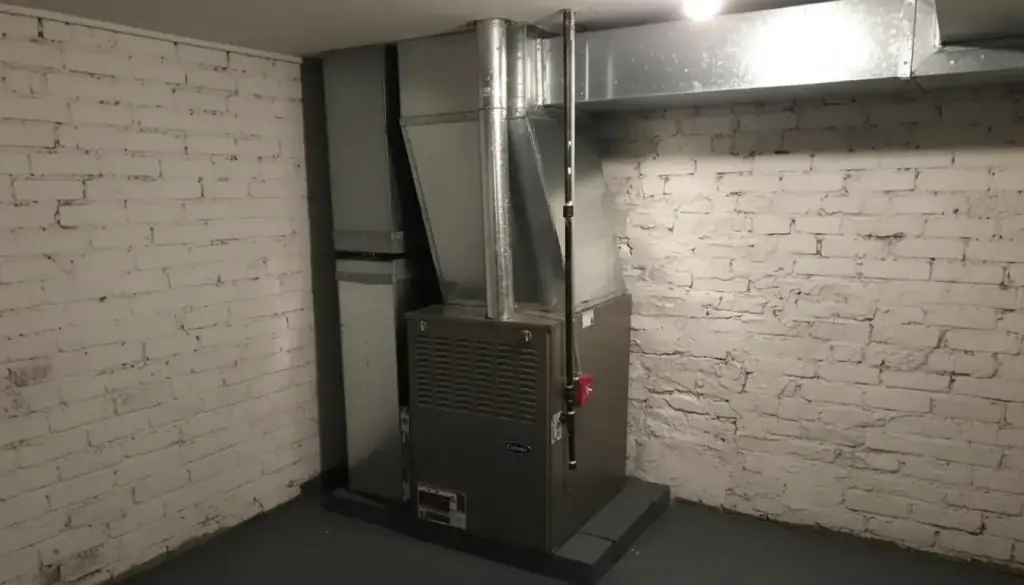
When a furnace will not light, short-cycles or barely pushes air
Furnace trouble tends to show up as one of three things: the burner never ignites, it fires and shuts off again before the house warms, or the heat comes out weak. The cause can be as small as a dirty flame sensor or a blocked vent, or as large as a failed component. New York Mechanical repairs furnaces of all makes and models, from minor adjustments to complex component failures.
One homeowner, Louis D., called for an estimate on ductwork. Anthony spent about 30 minutes inspecting the furnace and the ducts and vents, found the air intake vents blocked, did some light cleaning and adjusted the fan speed on the furnace. By Louis's account the airflow was then pushing the heat much better. A repair that size is the reason the inspection comes before any quote.
If your furnace is throwing an error code, write it down or text a photo of the unit along with the symptoms, and the troubleshooting can start before anyone drives over. The team covers Staten Island, Brooklyn, Manhattan and Queens.
Diagnostics before parts, and heat pumps kept ahead of the season
The technicians combine advanced diagnostic training with hands-on work, so the fault is found before anything gets replaced. The price is given before the work begins, and it reflects the real scope of the repair. They are trained on all major brands, including Carrier, Trane, Bosch, York and Rheem.
A mini-split or central heat pump earns its keep in winter and summer both, which makes upkeep worth doing on a schedule. Clean components and proper refrigerant levels reduce strain and lower running costs. Worn parts caught early do not fail during extreme temperatures. Routine care reduces wear and extends the life of the system.
When a new system is the better answer, installations are Goodman and Daikin, with high-efficiency models in the AFUE 80-98 range. Financing is available through FTL Finance and Synchrony.
When is a furnace worth repairing, and when is it time to replace?
Most early trouble starts at the filter. A clogged one makes the blower work harder to move less air, which shortens the life of the whole system. Furnaces usually last between 15 and 20 years with proper maintenance; past that, rising energy bills, uneven heat, strange noises and repeated repairs all point toward replacement.
A yearly professional visit before the cold arrives is the common rule, with older units or hard-working households sometimes worth checking more often. The visit catches the small fault while it is still a small fault.
Not sure which side of the line your furnace is on? Describe what it is doing when you call (646) 315-2271, and the inspection will say whether a repair or a replacement makes more sense.